U-Turns
Take extra care when making U-turns as they can be dangerous. U-turns
cannot be made:
• Where there is a NO U-TURN sign
• On motorways
• At traffic lights unless you see a U-TURN PERMITTED sign at the
intersection
• Across an unbroken (continuous) lines, double centre unbroken
(continuous) lines, unless the line closest to you is broken.
You must start your U-turn from the marked lane nearest to the centre of
the road or, if there are no lane markings, the left of the centre of the road.
Before starting the U-turn you must make sure it is safe: check mirrors
and blind spots and that you have a clear view of any approaching
traffic.
You must not begin your U-turn unless you can make the turn without
unreasonably obstructing traffic. Give way to all vehicles and pedestrians
and signal before you start to turn.
NSW When Turning Right At Traffic Lights
When turning right at traffic lights:
• Enter the intersection as shown in the diagram, unless a sign indicates
otherwise or there is a red right turn arrow displayed
• Wait until oncoming traffic clears or breaks and then turn safely.
If the lights change to yellow or red while you are in the middle of the
intersection, you are allowed to turn right. You must turn as soon as it
is safe to do so. Be sure your front wheels and car are straight and not
blocking the oncoming traffic.
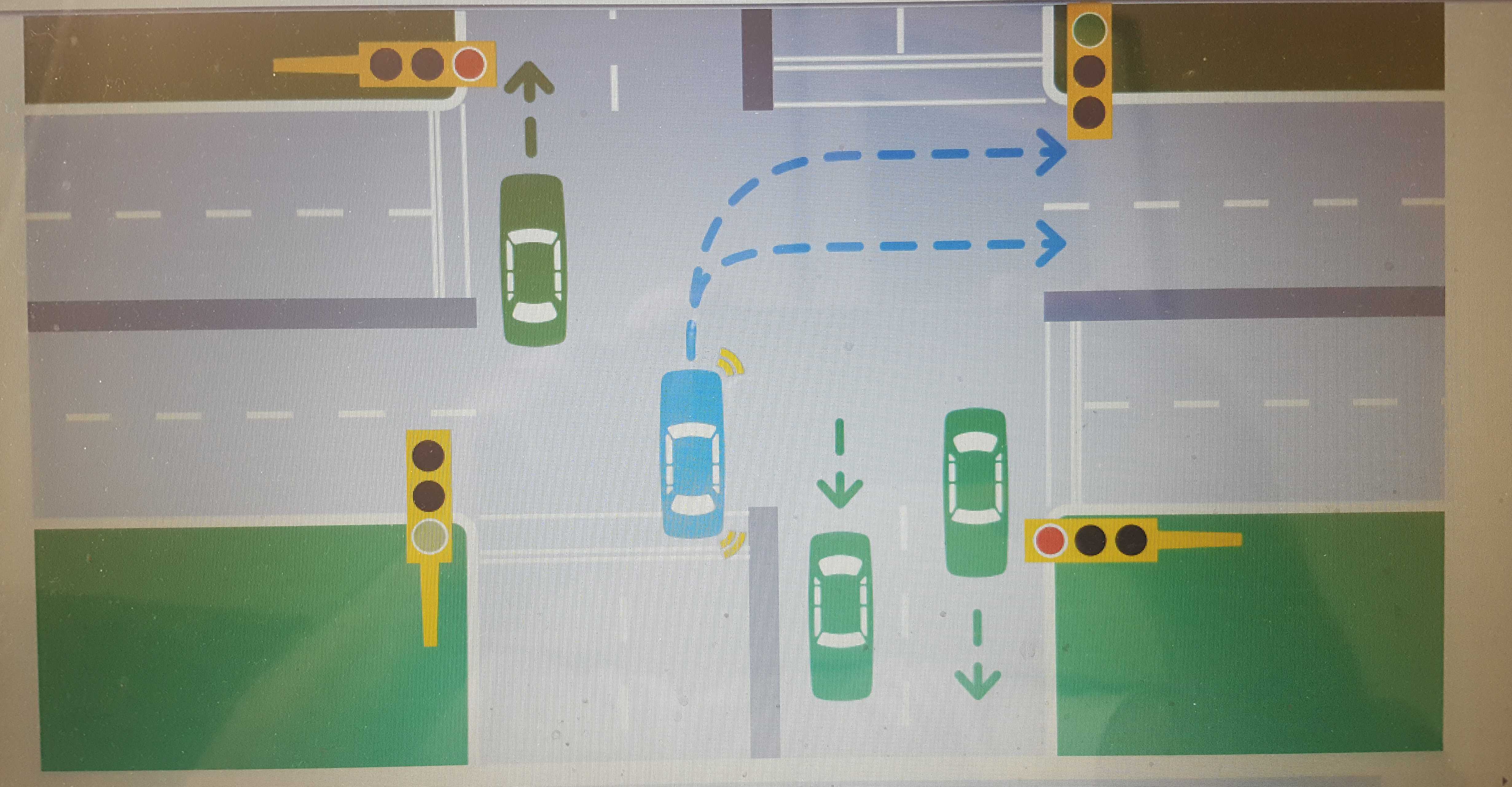
Car A enters the intersection.
Speeding in NSW
It’s an unfortunate and scary fact to know that speeding remains the biggest single road safety issue on NSW roads.
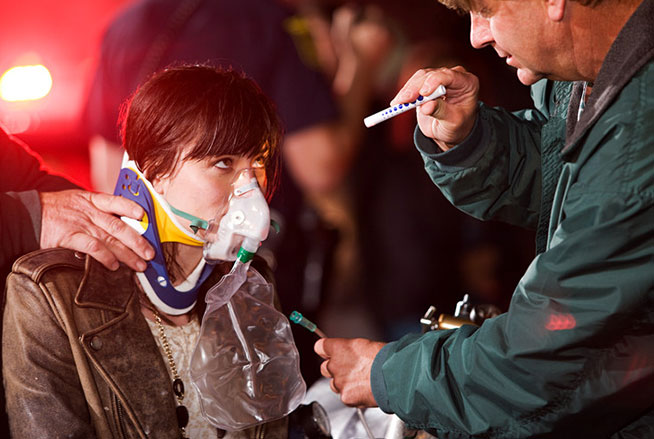
Even though the NSW road toll has dropped from more than 1200 each year in the 1970s to less than 500 (based on the 2008 road toll and the preliminary figures for 2009), speeding remains an ongoing problem.
In the 1970s and early 1980s, drink driving was Australia’s biggest road safety challenge. However since random breath testing was introduced in 1982 there has been a change in community opinion – drink driving is not acceptable. If we can all adopt this attitude to speeding as well our roads will be a much safer place.
With the decrease in drink driving, speed has become the biggest road safety challenge for NSW.
The size of the problem
In NSW speeding is a factor in about 40 per cent of road deaths. This means on average around 177 people die each year in speed-related crashes in NSW.
Speeding was a factor in the deaths of 857 people over five years 2006-2010. In addition to those killed, more than 4100 people are injured in speed-related crashes every year.
Did you know each year around 700,000 speeding offences are recorded in NSW?
Risky business
It’s not that hard to work out that speeding increases the risk of a crash and the severity of the crash outcome.
The risk of causing death or injury in an urban 60km/h speed zone increases rapidly even with relatively small increases in speed. If you are driving are 65km/h in a 60km/h speed zone you are doubling your chances of having a crash. At 70km/h, your risk of having a crash is more than four times the risk at 60km/h.
| SPEED – KM/H | RISK RELATIVE TO 60KM/H |
|---|---|
| 65 | Double |
| 70 | 4 times |
| 75 | 11 times |
| 80 | 32 times |
The risk of a crash when driving at 68km/h in a 60km/h zone is the same as driving with a blood alcohol level of 0.08. The risk of a crash when driving at 72km/h in a 60km/h zone is the same as driving with a blood alcohol level of 0.12.
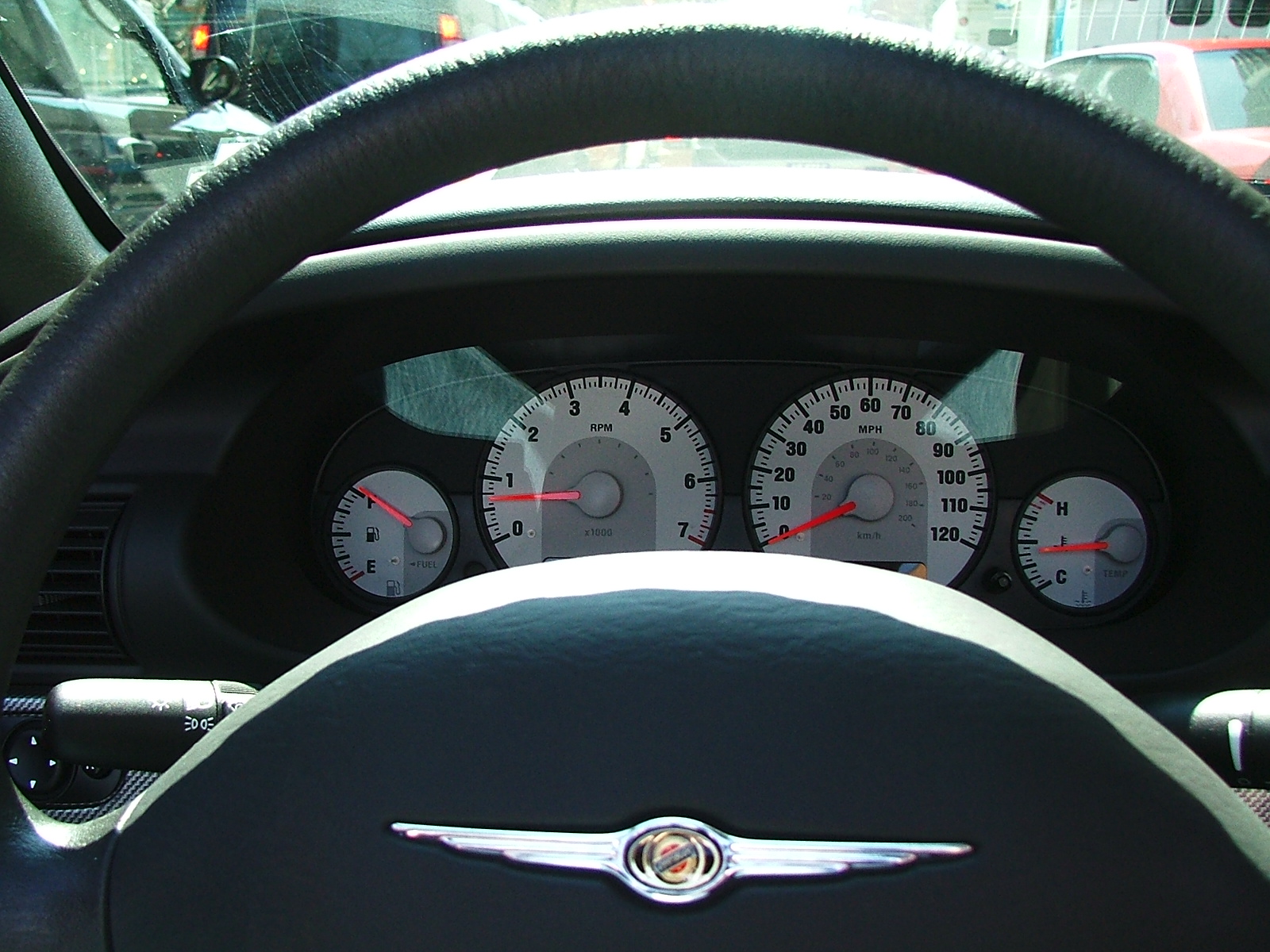
A key issue in speeding-related crashes is that most motorists underestimate the distance needed to stop. A car travelling at 60km/h in dry conditions takes about 38 metres to stop. A car travelling at 80km/h needs an extra 20 metres.
The message is simple ‘Don’t Rush’
In order to help raise awareness of the issue surrounding speeding Roads and Maritime Services launched the road safety speeding campaign ‘Don’t Rush’. The campaign focuses around the need to reinforce the crash consequences of speeding, and to contribute to an overall reduction in the road toll. It is important that communities are conscious of the emotional and physical impact on others road trauma has. Therefore the ‘Don’t Rush’ campaign also focuses on encouraging community caution amongst peers in speaking out against other in their peer group who don’t stick to the road rules.
Males in particular are the campaigns primary focus, as they are over represented in speed-related crashes in NSW.
You can see the ‘Don’t Rush’ messages from Professor Owler and Testimonials spoken by real life crash survivors and their families on the Centre for Road Safety website.
NSW SAFER DRIVERS COURSE
If you’re on your Ls and keen to learn more about safer driving behaviours then the Safer Drivers Course is for you.

The Course will help you understand more about speed management, gap selection, hazard awareness and safe following distances and prepare you for when you drive unsupervised on your Ps.
You will also receive 20 hours of log book credit once you complete the Course.
To be able to attend a Course you must be on your Ls, completed 50 log book driving hours and be under 25.
This is 50 actual hours of on-road driving and does not include the hours that can be accrued through (3 for 1) structured professional instruction.
Gaining credits on log book hours explained
With all the different ways you can make up log book hour credits, it is not hard to get information overload.
Before you can take a Driving Test, you need to record 120 log book hours. Here’s a break down on the different ways you can earn credits towards your 120 log book hours:
- You can get extra credit for driving lessons with a professional instructor. For every hour of professional driving lessons you do, you’ll receive a bonus two hours credit. So a one-hour lesson counts for a total of three hours credit in your log book. This is capped at a total of 10 private lesson hours (30 log book hour credits).
- Doing the Safer Drivers Course can get you extra credit too. Once you’ve completed 50 log book hours, you can choose to complete the Safer Drivers Course – this will give you 20 log book hour credits. This course has been designed for a learner to attend once, and therefore the 20 hours of bonus log book credit will only be deducted once.
What the Safer Drivers Course involves
The Safer Drivers Course involves two modules:
- A three-hour group discussion with other L platers for you to learn how to manage risks on the road.
- A two-hour in-vehicle coaching session with a coach and another learner so you can learn a range of practical safe driving behaviours.
You don’t have to do both of these sessions in one day, however it is recommended you complete both sessions within one month.
How to book a Safer Drivers Course
Simply view the Safer Drivers Course Providers list and contact the Provider directly.
Or you can call 13 2213 to find out where the closest Course Provider is.
Because the Course is being gradually rolled-out in NSW, Providers are not currently available in all areas. You’re encouraged to continue checking the Safer Drivers Course Providers list to find out when a Course is available in your area, however you can choose to do a course in any location.
The Course costs $140 and can be paid directly to the Course Provider, not Roads and Maritime Services.
On the day
All Course materials will be supplied at the Course and the vehicle will be supplied for the in-vehicle coaching session. Just make sure that you turn up with your licence and your log book!
Safer Drivers Course Video
Check out other learner drivers who have attended the Safer Driver Course, and how it has had a positive influence on their learning to drive experience by watching the Centre for Road Safety’s Safer Driver Course video.
Free course for disadvantaged learner drivers
The NSW Government is offering 1000 free places on the Safer Drivers Course each year to help young learner drivers from disadvantaged backgrounds and Aboriginal communities. The fee exemption allows those who are financially disadvantaged to benefit from the road safety outcomes of the Safer Drivers Course.
To be eligible for a free place you need to:
- Hold a valid learner licence
- Be aged under 25 years
- Have completed a minimum of 50 log book hours
- Hold a current Health Care Card or Pensioner Concession Card issued by the Department of Human Services – Centrelink.
To apply for a free place you need to contact a course provider to enrol in a course and complete the Safer Drivers Course Concession Application form. You will also need to provide a copy of your Health Care Card or Pensioner Concession Card to your course provider.
Visit the Roads and Maritime website to find a Safer Drivers Course provider and speak to them about the free places.
Drugs and Driving in NSW
Mobile Drug Testing
NSW Police can test drivers for drugs anytime or anywhere, there’s no escaping it.
Serious safety problem
Safe driving requires good judgement and sharp concentration. You also need to react quickly to changing situations on the road. Drug driving puts everyone on the road at risk. Our research shows that the presence of illegal drugs is involved in the same number of fatal crashes as drink driving.
Mobile Drug Testing (MDT) operates alongside RBT for alcohol and police also have the power to test drivers they believe may be under the influence of illegal or prescription drugs. MDT is increasing, with police conducting up to 200,000 roadside drug tests in NSW by the year 2020.
Our MDT campaign combined with enforcement is the best way to stop drivers who have used drugs from getting behind the wheel when they shouldn’t.
When you are stopped
MDT detects drivers who have recently used four common illegal drugs: ecstasy, cannabis, cocaine and methamphetamine (including speed and ice). MDT can be conducted at roadside operations along with RBT, or by NSW Police in vehicles patrolling our roads.
As with RBT, you will be stopped by police, asked for your licence, and complete a breath test for alcohol. You will then be asked to wipe an MDT test stick down your tongue to check if you have illegal drugs in your system. The results take a few minutes to appear and you must wait until police say you are in the clear. Most drivers test negative and are soon on the road again.
If your MDT test is positive, you’ll be taken to a roadside testing van or bus, or back to a police station to provide a saliva sample. This sample will also be tested and if positive, you’ll be banned from driving for 24 hours. All samples are sent to a laboratory for analysis. If the laboratory confirms the positive roadside result, police will contact you and charge you with driving with the presence of an illegal drug.
If you are stopped for MDT or other reasons at the roadside, your behaviour or driving is erratic and police suspect you are under the influence of illegal or prescription drugs, they can also require you to undergo blood and urine testing. The tests cover a large range of legal and illegal substances that can impair drivers and can lead to a charge of driving under the influence (DUI), which has serious penalties.
All drivers involved in fatal crashes undergo blood and urine testing for drugs and alcohol.
Consequences
Drivers caught with drugs in their system will face court, could lose their licence, be fined and end up with a criminal record. For a presence offence detected through an MDT, the court may impose a fine of up to $1,100 and an automatic six month licence disqualification.
Drivers proven to be driving under the influence of illegal or prescription drugs face fines of up to $3,300 and automatic three-year licence disqualification for a first offence. These offenders can also be sentenced to up to 18 months in prison. Higher penalties apply for second and subsequent offenders.
Don’t make a foolish decision
Illegal drugs can be detected in your saliva by an MDT for a significant time after drug use, even if you feel you are OK to drive. The length of time that illegal drugs can be detected by MDT depends on the amount taken, frequency of use of the drug, and other factors that vary between individuals. Cannabis can typically be detected in saliva by an MDT test stick for up to 12 hours after use. Stimulants can typically be detected for one to two days.
If you think that you may have illegal drugs in your system, the best decision is not to drive.
Protecting the community
From 2010 to 2016, 403 people died on our roads in crashes involving motorists with at least one of three illicit drugs – cannabis, methamphetamine (including speed and ice) or ecstasy – in their system.
Taking illegal drugs before driving puts you at greater risk of injuring or killing yourself, your friends or other innocent people. NSW Police are doing their job to keep you, your family and everyone else on our roads safe by carrying out MDT operations
COPING WITH THE UNEXPECTED
COPING WITH THE UNEXPECTED
There are no magic formulas or techniques for predicting when
unexpected hazards will pop up when driving. Suggesting that you expect
the unexpected when driving is easy to say, but harder to do.
Applying the following skills can help you reduce the risk of something
unexpected causing problems for you or other road users:
• Scan well ahead of your car – keep your eyes moving to the front, left
and right.
• Look for indicators on other vehicles.
• Observe the head and eye movements of other drivers (eg where are
they looking? At you or at something else).
• Look for pedestrians, cyclists and motorcyclists that may be hidden
by other vehicles or objects – check your blindspots.
• Give yourself plenty of time to detect and cope with hazards and
space to take some action to avoid a crash.
• Be cautious in situations that are new or different (eg roadworks,
crash scenes).
• Make your vehicle easier to see – if it is dull, overcast or raining turn
on your headlights, even during the day.
• Slowing down is a good precaution as it gives you both time and
space to cope with a hazard.
KEY POINTS SUMMARY: EXPECTANCIES AND
THE UNEXPECTED
• Drivers often rely on expectancies when they drive.
• Other drivers will make mistakes and do things that you don’t expect.
• To cope with the unexpected, use a scanning routine and keep a safe
distance from other road users.
• Give yourself plenty of time and space to cope.
• Make your vehicle easier to see – drive with your headlights on
Alcohol and driving
Most crashes involving alcohol happen in what the experts call ‘high
alcohol hours’ – mostly weeknights (particularly Thursday, Friday and
Saturday nights) and weekends.
During these hours about 57 per cent of fatal crashes are alcohol-related.
Outside of these hours (known as ‘low alcohol hours’) only 16 per cent of
fatal crashes are alcohol-related. So, it is more dangerous to drive on Friday
and Saturday nights as other drivers are more likely to be affected by alcohol.
It is worth noting that drivers with alcohol in their blood are not only more
likely to crash, but more likely to die if severely injured in a crash. Alcohol
has an adverse effect on your body when it is trying to cope with injuries
and associated problems such as blood loss. The emergency medical
treatment of injured drivers affected by alcohol is also much harder than
treating injured drivers with no alcohol in their system. Avoiding driving
when you have been drinking not only reduces your risk of crashing but
also reduces your chance of dying if you are seriously injured. So staying
with a zero BAC when driving gives you an edge. It is the safest BAC for
driving regardless of your licence type.
KEY POINTS SUMMARY: ALCOHOL AND DRIVING
• Alcohol is a contributing factor in about 20 per cent of fatal crashes
and five per cent of those causing injury.
• More than half the drivers killed have a BAC of 0.15 or more – three
times the legal limit of 0.05 for full licence holders.
• Staying below 0.05 is hard as not everyone takes the same number
of alcoholic drinks to reach this limit.
• Women and people of both sexes who don’t weigh a lot get to higher
BACs faster.
• Men are more likely to drink and drive and more likely to be involved
in alcohol-related crashes.
• Alcohol reduces your ability to concentrate and to look for and
respond to hazards when driving.
• Alcohol slows your reflexes when you need to take action such as
braking.
• Alcohol increases the risk of a crash. Even at a 0.05, crash risk is
about twice what it is at zero.
• The safest BAC for driving is zero.
• About 57 per cent of fatal crashes in ‘high alcohol hours’ are alcoholrelated.
• High intake of alcohol occurs mostly weeknights (particularly
Thursday and Friday nights) and weekends.
• Drivers with alcohol in their blood are not only more likely to crash,
but more likely to die if severely injured in a crash.
• Staying with a zero BAC when driving gives you an edge. It is the safest
BAC for driving regardless of your licence type.
Roundabouts
Roundabouts
Many intersections have a central roundabout. Roundabouts manage
the traffic flow in roads with either a single lane or multiple lanes.
Do not drive on the central island of a roundabout unless the size
of your vehicle means that you cannot avoid the wheels crossing
the central kerb.
Making turns and giving way at roundabouts
Approaching a roundabout: Vehicles entering a roundabout must give
way to any vehicle already in the roundabout.
Giving way at a roundabout: means the driver must slow down and if
necessary, stop to avoid a collision.
Turning left: On your approach to a roundabout you must select the left
lane, signal left, stay in the left lane to exit.
Going straight ahead: Do not signal when approaching the roundabout
but always signal left before exiting a roundabout.
You may approach the roundabout from either left or right lanes (unless
there are road markings with other instructions), drive in the same lane
through the roundabout and exit in the same lane.
Turning right: On your approach, to a roundabout you must select the
right lane, signal right, stay in the right lane and signal left before exiting
into the right lane.
Making a U-turn: When you use the roundabout to make a U-turn on
your approach signal right from the right lane, stay in the right lane, but
signal left before exiting into the right lane.
Exiting a roundabout: If practical, you must always signal left when exiting a roundabout.
Roundabouts: Risks to watch for
• Take extra care whenever you drive in a roundabout.
• Keep an eye out for cars that are leaving the roundabout.
• Be careful if changing lanes in a roundabout, particularly
when leaving.
• Look out for vehicles that are making a full turn.
• Watch for bicycles, long vehicles and motorcycles.
Motorways
Joining the motorway
The approach to a motorway is usually from a road on the left. Watch for a gap then increase your speed to safely merge with the traffic.

Driving on the motorway
Once on the motorway, stay in the left lane unless overtaking.
If there are three lanes and the left lane has many vehicles travelling at a slower speed than you, stay in the middle lane. After you have passed them, you should return to the left lane. The right lane is generally reserved for overtaking so move out of it as soon as it is safe to do so.
 When driving on a motorway you must:
- Not stop except in an emergency (if you have to stop, move to the emergency lane, breakdown lane or shoulder)
- Not make a U-turn or reverse.
If you miss your exit, continue travelling on the motorway until you reach the next exit.
Leaving the motorway
Make sure you:
- Move to the lane closest to the exit in plenty of time
- Give a signal and reduce your speed
- Check your speed to ensure you are not going too fast to make a safe exit.
Information about traffic lights and signals.
General
 Red means stop. Wait behind the stop line.
Do not go through the intersection.
 Yellow (amber) means stop. You can enter the intersection if you are so close that sudden braking might cause a crash.
 Green means proceed through the intersection carefully.
Turning arrows at traffic lights
Some traffic lights have arrows to control traffic turning right or left.
A green arrow means you can only turn in that direction.
A red arrow means traffic waiting to turn must wait behind the stop line until the arrow turns green or disappears, even if there is no traffic on the road.
 You must not go straight ahead or turn left. You may turn right.
 You must not turn right but you can go straight ahead or turn left if the way is clear.
 When the yellow (amber) arrow is flashing, you may proceed but you must give way to any pedestrian who is crossing the road into which you are turning.
Signs at traffic lights
 A STOP sign with three black dots is only seen at traffic lights. It means that if the lights are not working or are flashing yellow and you are approaching this sign, you must stop and give way to traffic as though you are at an intersection with stop signs.
 This sign allows you to turn left on a red light after stopping. When turning left you must give way to all traffic approaching from the right.
Left turn on red light is only permitted at intersections where the sign has been placed.
B signals
B signals separate buses and other vehicles at some intersections with traffic lights for a safer, smoother traffic flow. To ensure B signals work properly never drive in the lanes marked buses only.
B signals are attached to the usual traffic lights. They show a white B on a black background (some traffic lights have a red, yellow and white B signal attached to them). Shortly before the usual traffic signals change to green, the B signal lights up white. All other vehicles stay while the buses may go. Buses may proceed in any direction unless signs or markings indicate otherwise. When the lights turn green other vehicles may move off.

The red and yellow B signals (or the usual red and yellow traffic lights) tell bus drivers when to stop at the intersection.


Bicycle riders
Where the traffic at an intersection is controlled by traffic lights, cyclists may have signals that show them when to cross. Cyclists must follow these red, yellow or green bicycle symbols and proceed with care

Red light speed cameras
Red light cameras are used to photograph vehicles that go through a red light.
A penalty notice is then sent to the owner of the vehicle, who has the option to:
- Pay the fine.
- Advise Revenue NSW on a statutory declaration the name and address of the person driving at the time of the offence.
- Advise Revenue NSW you want to have the case heard by a court.
If you are crossing the intersection as the light turns yellow (amber) and it is not safe to stop, do not panic. Continue driving through the intersection. The camera only takes a photograph if you cross over the stop line 0.3 seconds after the light has turned red.
Traffic already in the intersection or entering on a yellow (amber) light will not activate the red light camera.
Red light speed cameras use digital technology that is capable of detecting both red-light and speeding offences.
Pedestrian signals
When making a turn at an intersection you must give way to pedestrians on the road into which you are turning.
Where the traffic at the intersection is controlled by traffic lights, there may be signals for pedestrians that show them when to cross.
Pedestrians must follow these signals.

