Slow down for flashing lights

1. Why has this new rule being introduced?

This rule was introduced to improve the safety of police and emergency workers, as well as the people they are protecting. The new rule provides certainty for motorists about how they should behave when emergency vehicles are stationary on the road and displaying blue or red flashing lights.

2. What are the key features of the new rule?

The new rule requires that motorists must not exceed 40km/h when passing a stationary emergency vehicle displaying flashing blue or red lights. Motorists must also give way to any person on foot near an emergency vehicle displaying flashing lights and not increase speed until a sufficient distance past the vehicle.

The new road rule will not apply when an emergency vehicle displaying blue or red flashing lights is on the opposite side of a road separated by a median strip.

3. How should I slow down safely to comply with the new road rule on a high speed road?

Motorists should always start slowing down in a controlled manner as soon as they first see blue or red flashing lights, taking into account the current road conditions including surrounding vehicles.

If an emergency vehicle is attending an incident in an area of low visibility, due to the location or weather conditions, it will be because there are no other options to move to a safer location. Further care should be taken in these circumstances.

The traffic and safety impacts of the rule will be monitored during the first 12 months and the implementation of the rule will be independently evaluated.

4. Why do motorists need to slow down to 40km/h?

40km/h is considered a safe speed around vulnerable road users. This speed is consistent with speed limits in:

5. What is considered a sufficient distance past the vehicle?

The new rule will require that motorists do not increase their speed until a sufficient distance past the emergency vehicle so as not to cause a danger to any person near the vehicle.

For example, a fire truck may be stationed by the roadside with flashing lights and firefighters may be managing a fire a short distance away from the vehicle. In this instance, motorists should not increase their speed until they are fully past the vehicle and the emergency workers. In contrast, motorists will be required to slow down to 40km/h for a shorter distance when passing a police vehicle that has pulled over another vehicle on the side of the road.

It is the responsibility of all drivers to be aware of the individual circumstances of each roadside incident and to drive at a safe and appropriate speed under the speed limit.

6. Does the new rule apply on all road types?

Yes, it applies to all roads, including motorways, highways and freeways. If there is a median strip between your vehicle and the stationary emergency vehicle you will not need to slow down. If the emergency vehicle is on the median strip then the rule will apply to vehicles on both sides of the road.

7. What is a median strip?

A median strip is an area or structure that separates vehicles travelling in opposite directions. A median strip can be covered in grass, it can include or be a wire rope or concrete barrier or be a continuous painted island filled with diagonal bars.

A median strip does not include double white lines, a single white line or a broken white line on its own or in combination with a continuous white line. It also does not include wide centre lines or short painted islands typically found as part of intersection turning lanes.

8. What types of vehicles are covered by the new rule?

Motorists must slow down to 40km/h when passing the following emergency vehicles when stationary and displaying flashing blue or red lights:

  • NSW Police Force vehicles
  • Ambulance Service of NSW vehicles
  • Fire & Rescue NSW vehicles
  • State Emergency Service vehicles
  • Rural Fire Service vehicles
  • Volunteer Rescue Association vehicles
  • Traffic Emergency Response vehicles

9. What is the penalty for not obeying this new road rule?

A $448 fine and three demerit points will apply for motorists who do not comply with the new road rule. A maximum court penalty of $2,200 will also apply. This is comparable with the current penalty when it is determined that a motorist has driven negligently in the presence of obstructions or hazards, including stopped emergency vehicles and personnel.

10. What is the government doing to educate motorists about the new rule?

Transport for NSW, with the support of emergency service agencies and other stakeholders, launched a community education campaign across NSW on 30 July 2018 to give the community time to understand the requirements of the rule. The campaign includes TV and radio advertising, social media promotion and digital signage on major roads.

11. Don’t motorists already slow down if they see a vehicle with flashing lights ahead?

The new rule establishes a required standard for safe behaviour and further ensures  emergency workers can do their work without worrying about being struck by a passing vehicle. The rule has been designed to provide maximum safety benefits to emergency workers while keeping it simple for the community to understand.

12. Why is there a 12 month trial?

This will allow an evaluation of the safety impacts and any other consequences of the new rule, and enable consideration of reviews and outcomes from other jurisdictions implementing similar rules.

13. How will the new rule be evaluated?

The NSW Government will monitor the safety and traffic impacts of the rule in the 12 months the trial is running, in consultation with key stakeholders, as part of an independent evaluation to determine the impact on the safety of emergency service workers and drivers.

In addition to the safety impacts of the new rule, the evaluation will look at what impact the trial has had on driver awareness of the law and community attitudes, as well as any unintended consequences. It will also consider reviews and outcomes from other jurisdictions implementing similar rules.

14. Who will lead the evaluation?

The evaluation will be led by Transport for NSW in close consultation with NSW Police, emergency service organisations and stakeholder groups. The findings of the evaluation will inform the Government’s consideration about what if any further changes should be made to the rule and how its implementation could be improved to better achieve road safety outcomes, including whether it should apply to drivers when passing other vehicles which display flashing lights, such as tow trucks and motor breakdown service vehicles.
Get your hand off it

Are you driving blind?

Research shows that being distracted when driving, such as by a mobile phone, increases the risk of a crash. Simply taking your eyes off the road for longer than two seconds, doubles the risk of a crash. At 60 km/h if you look at your phone while driving for just two seconds, you travel 33 metres blind. A short lapse of concentration can have lifelong consequences.

See how far you travel at different speeds when you take your eyes off the road for just two seconds:

Travel speed Metres travelled in 2 seconds
40 km/h 22.22
50 km/h 27.78
60 km/h 33.33
80 km/h 44.44
100 km/h 55.56

Overview

Our original Get your hand off it campaign has evolved to highlight the serious consequences of using your mobile phone illegally while driving, which could cost you or those you care about everything.

We have adapted the successful ‘Are you driving blind?’ mobile phone distraction campaign launched by the Queensland Department of Transport and Main Roads in March, 2015.

The campaign also encourages drivers to know the rules about mobile phone use.

Dangerous problem

Crash data from 2010 to 2014 showed there were 236 crashes where hand-held mobile phone use by drivers was identified as a contributing factor. This included seven fatal crashes and 116 injury crashes. These crash numbers are considered to be under-reported because of the difficulty of finding evidence of illegal mobile phone use at crash scenes. This suggests the size of the problem could be much greater.

From July 2014 to June 2015, more than 35,300 fines were issued to drivers in NSW for using hand-held mobile phones, showing the problem is still prevalent.

Audience

Primary: Males and females aged 17-39 years. Secondary: All NSW drivers.

Research shows that males and females aged 17-39 years have the highest rate of claimed use while driving, and the greatest involvement in crashes where hand-held mobile phone use is a factor.

Main messages

  • It’s not worth it. Get your hand off it
  • At 60 km/h if you look at your phone while driving for just two seconds, you travel 33 metres blind

Slow Down

Your speed decides the outcome. Slow down.

Overview

In 2015, 146 people died in crashes involving speeding, either travelling above the speed limit or too fast for the conditions. Thousands were injured, and will carry their injuries for life.

When the unexpected happens on the road – the speed that you’re travelling at matters. ‘Just a bit over’ can be the difference between being able to stop in time or not at all. If the worst happens and there is a crash, any extra speed means extra impact force – and the human body can only tolerate so much before death or serious injury is all but inevitable.

We know that many drivers feel that it’s sometimes ok to speed because they’re an experienced driver, and they feel in control. But this ignores that there are factors outside our control when driving.

The ‘Slow Down’ campaign encourages drivers to reduce their speed because it’s difficult to know what is up ahead.

We all need to be compliant and responsible when on the road, but all road users can make mistakes. A mistake should never cost someone their life or their long term well-being.

Audience

The campaign targets males aged 17 to 49, who are most frequently involved in speeding crashes.

Main messages

  • Your choice of speed can affect others as well as yourself
  • Slow down to reduce the risk or severity of a crash
  • When speeding, there is less opportunity to react if other people make mistakes

40km/h around stopped emergency vehicles

A new road rule is now in place in NSW to improve the safety of emergency workers, as well as the people they are protecting

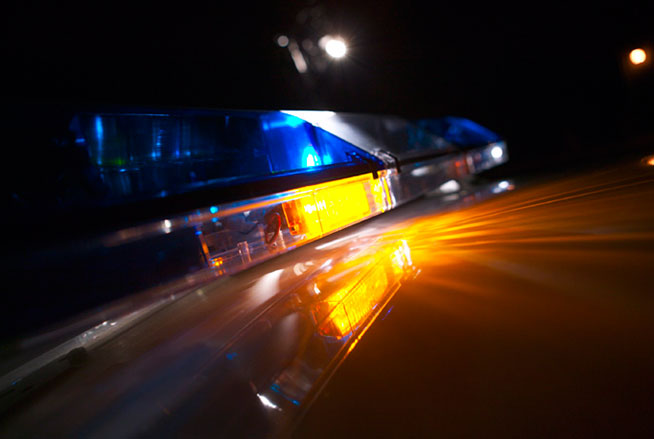
The new rule requires motorists to slow down to 40km/h when passing a stationary emergency vehicle displaying blue or red flashing lights.

The rule also requires motorists to give way to any person on foot in the immediate area of the emergency vehicle. Motorists should not increase their speed until they are a safe distance past the vehicle.

The NSW Government will monitor the safety and traffic impacts of the rule during a 12-month trial period in consultation with NSW Police, emergency service organisations and other stakeholders.


Key messages of the campaign

  • For everyone’s safety, motorists must slow down to 40km/h when passing stationary emergency vehicles displaying blue or red flashing lights
  • The rule applies to vehicles travelling in both directions, unless the road is divided by a median strip
  • Motorists who do not comply with the rule will face a $448 fine and three demerit points.

Police, firefighters, ambulance officers, State Emergency Service and rescue volunteers perform difficult and dangerous work for the community. But just like everyone doing their job, they should feel safe and know that they are protected at work.

Cameron, after 3 times trying to pass the test…

Cameron, after 3 times trying to pass the test, 1 lesson with you made all the difference.

You made things so easy to understand and 2 days later Jacob got his P’s.

He also said how comfortable and confident you made him feel.

I would highly recommend anyone to have lessons with Cameron prior to attempting their P’s test.

Thanks Tanya W………

NSW Digital Driver Licence

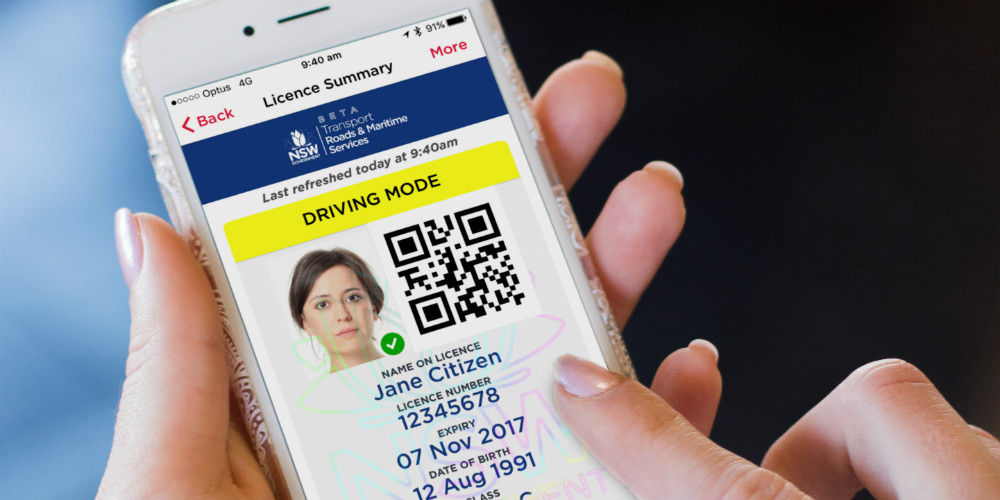
The digital driver licence is the electronic version of the NSW Driver Licence available on your phone. It is planned for release across NSW in 2019, and designed to be convenient and make life easier.

With a regional trial already in progress in Dubbo, and a metro trial in Sydney’s Eastern suburbs scheduled for late 2018, driver licences will soon be added to the list of digital licences available through the Service NSW app.

A digital licence allows you to view, show, update and renew your licence. No need to visit a service centre or wait for your plastic card in the post.

NSW digital licence
NSW digital licence

By November 2018, licence holders, NSW Police and people checking licences in Bondi, Bondi Junction, Bronte, Clovelly, Coogee, Randwick and Waverley (or postcodes 2022, 2024, 2026, 2031 and 2034) will be invited to take part in the metro trial. The digital driver licence will only be accepted by participating licence checkers in these postcodes.

This trial is in addition to the current Dubbo trial.

The trial will test the convenience and functionality of the digital driver licence. It will also help identify any changes that may be needed to support the statewide roll-out in 2019.

To participate in the trial, if you haven’t already, you will need to create a MyService NSW Account, link it to Roads and download the Service NSW app.

During the trial you will still need to carry your plastic driver licence card.

Blacktown Driving Test Pass

Hi Cameron!

This is the twins from Bella Vista!

We just wanted to let you know that we just did our Ps test at Blacktown and we both passed !!

We would just like to thank you so much for guiding us in our lessons!

You gave us a lot of confidence going into this test !

We also appreciate your energy and enthusiasm during our lessons. Oh and amazingly we both got 104/105 !

My instructor said in all his years he has never seen that, he said this is a conversation for the staff room ha-ha !

Thank you Ali and Jacki

Driving Test Pass

1/3/2018

Hi Cameron,
finally after 4 times failed, today I pass and got my full license. Thank you for everything that you tought, I’ve been so blessed that I took driving lessons with you. God bless you. Cheers, Artie.

SPEEDING PENALTIES FOR L AND P PLATE DRIVERS

SPEEDING PENALTIES FOR L AND P PLATE DRIVERS
Speeding is the number one cause of fatal crashes on our roads.

It has been shown time and time again that simply slowing down and driving safely for the conditions is the best way to reduce road crashes.

Research has shown that even five km/h over a 60 km/h speed limit can double the risk of an injury crash. The risk doubles again for each additional five km/h travelled.

At higher speeds you have less time to detect and respond to hazards. When you are still new to driving you need even more time to assess hazards and deal with dangerous situations.

Penalty rules

It’s important that you know the rules so you don’t get fined or, even worse, lose your licence.

  • Learner and P1 plate drivers will have their licence suspended for at least three months for ANY speeding offence
  • P2 plate drivers will have their licence suspended for at least three months for a second speeding offence
  • Learners and P plate drivers receive a minimum of four demerit points and a fine for any speeding offence
  • Speeding attracts additional points if committed in a school zone
  • Double demerit points apply for speeding during all holiday periods such a long weekends, Christmas, New Year and Easter
  • Learner and provisional riders and drivers face immediate suspension and confiscation of their licence for speeding more than 30 km/h over the speed limit.

Like most things, it takes lots of practice to become a safe and confident driver. These rules are designed to give new drivers time to learn to adjust the vehicle speed to suit the traffic situations and driving conditions.

More information on speeding penalties is available on the Roads and Maritime Services website

DRIVING SAFELY IN THE WET

DRIVING SAFELY IN THE WET
When the rain comes down, the roads can get crazy.

The streets are busier as more people drive to avoid the rain and the roads become slippery. There’s the water itself, but the rain also brings oil and other slippery muck to the surface.
It’s harder to see the road ahead, your windscreen becomes foggy and your brakes are less effective.
It’s no surprise that in the wet weather there are more prangs, but there are some simple things you can do to avoid getting into trouble.

Slow down

It seems obvious, but it’s always a good idea in wet weather to ease up on the gas.
You should also increase the distance between you and the cars ahead.
In normal conditions, it’s recommended that you leave a three second gap – in the wet, try to double this.

Take it easy

You need to take extra care in all aspects of your driving. Accelerate and steer smoothly. Avoid slamming on the brakes – apply steady pressure.

Look out

Make sure you can see and be seen. Turn on your lights and use your air conditioner and/or demister to keep your windows from fogging up.
In heavy rain, you’ll wish you had replaced those worn old windscreen wipers. Before that happens, check out whether you need new ones – they’re cheap to buy and easy to install.

Watch out

Keep an eye out for water on the road. Sometimes water can gather in dips or unseen potholes, creating deceptively deep pools.
Cars have been known to ‘aquaplane’ after hitting water like this (that is, ‘glide’ out of control across the road).
If you do come across water across the road, then cut your speed right back to 30 or 40km/h. After you’ve driven through, touch your brakes lightly to dry out the brake pads.
Obviously, if there’s water flowing across a road in a low-lying country area, for example, you should stop and check the depth before continuing (it shouldn’t be higher than the lowest point on the wheel rim).

Patience

The most important thing is to be patient. When it’s raining and chaotic, everyone’s in the same boat…