Scam Alert.

Warning: Roads and Maritime Services is the only licensing authority in NSW

A number of organisations claim that they can provide motor vehicle registrations and driver licences, including so-called ‘100-year driver licences’ and ‘perpetual vehicle registrations’.

Under NSW legislation, Roads and Maritime Services is the only vehicle registration and driver licensing authority in NSW.

Customers are reminded that:

  • You cannot legally register your vehicle in NSW with organisations other than Roads and Maritime
    Registering your vehicle with any unauthorised organisation claiming to provide vehicle registrations will mean your vehicle is not legally registered or insured for compulsory third party in NSW. This is regardless of whether the vehicle has undergone a roadworthiness inspection and/or purchased compulsory third party insurance
  • You can only get a NSW driver licence from Roads and Maritime
    Anyone getting a licence card from any unauthorised organisation will be unlicensed to drive a motor vehicle in NSW
  • Your number plates may be confiscated
    If the NSW Police stop a vehicle bearing number plates supplied by an unauthorised organisation, the driver of the vehicle may be infringed for driving an unregistered and uninsured vehicle. The number plates may also be confiscated
  • You may be personally liable if you have an accident
    In the case of an accident where the driver of a vehicle bearing number plates from an unauthorised organisation is responsible, they may be held personally liable for any damage or injury caused.

For enquires please contact Roads and Maritime on 13 22 13.
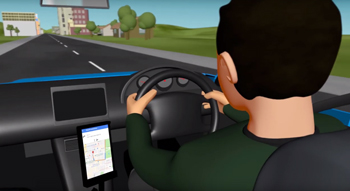
Mobile Phones

The dangers of distraction

Driving is a complex task. Anything that takes your mind or eyes off the road, or your hands off the wheel, not only compromises your safety, but that of everyone else on the road.

Make sure you know the rules about mobile phone use when driving and watch our animated video.

Mobile phone detection cameras operate across NSW targeting illegal phone use. The program includes both fixed and transportable trailer-mounted cameras. Along with regular enforcement operations by NSW Police, these cameras target illegal mobile phone use anywhere, anytime.

Being distracted increases your chances of having a crash. It slows down your reaction times and puts you in danger of failing to see hazards such as traffic lights, stop signs or other road users, including pedestrians and bicycle riders. Avoid the temptation of using your mobile phone illegally while driving:

  • Use a mobile phone cradle fitted in your vehicle
  • Get Bluetooth set up or installed in your vehicle
  • Get a passenger to answer your messages/calls
  • Put your phone on silent
  • Activate the ‘Do not disturb while driving’ function on your phone (e.g. Apple iOS or Android)
  • Tell others not to call or text you when you’re driving
  • Divert your calls to voicemail
  • Pull over when and where it’s safe and legal to do so

Get Your Hand Off It

Are you driving blind?

Research shows that being distracted when driving, such as by a mobile phone, increases the risk of a crash. Simply taking your eyes off the road for longer than two seconds, doubles the risk of a crash. At 60 km/h if you look at your phone while driving for just two seconds, you travel 33 metres blind. A short lapse of concentration can have lifelong consequences.

See how far you travel at different speeds when you take your eyes off the road for just two seconds:

Travel speedMetres travelled in 2 seconds
40 km/h22.22
50 km/h27.78
60 km/h33.33
80 km/h44.44
100 km/h55.56

Overview

Our Get your hand off it campaign has evolved to highlight the serious consequences of using your mobile phone illegally while driving, which could cost you or those you care about everything.

The campaign also encourages drivers to know the rules about mobile phone use.

Dangerous problem

Crash data from 2010 to 2014 showed there were 236 crashes where hand-held mobile phone use by drivers was identified as a contributing factor. This included seven fatal crashes and 116 injury crashes. These crash numbers are considered to be under-reported because of the difficulty of finding evidence of illegal mobile phone use at crash scenes. This suggests the size of the problem could be much greater.

From July 2014 to June 2015, more than 35,300 fines were issued to drivers in NSW for using hand-held mobile phones, showing the problem is still prevalent.

Main messages

  • It’s not worth it. Get your hand off it
  • At 60 km/h if you look at your phone while driving for just two seconds, you travel 33 metres blind

Speed limits

Slowing down saves lives

Speed is the biggest single danger on NSW roads, contributing to about 40 per cent of road fatalities each year. International and Australian research shows that even small reductions in vehicle speed can reduce the number of deaths and the severity of injuries caused by crashes. A small decrease in vehicle speed can make a big difference to your chances of survival.

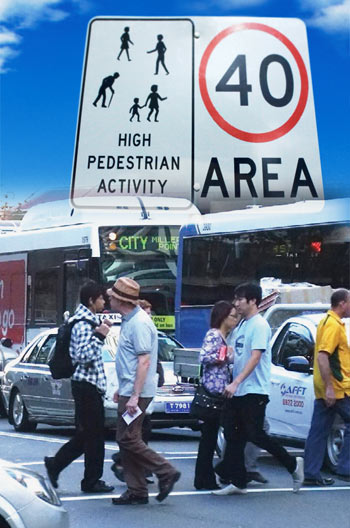
If a car hits a pedestrian at 50 km/h the pedestrian is twice as likely to die than if the driver had been travelling at 40 km/h. For every extra kilometre per hour of speed:

  • The stopping distance increases
  • The time to react and avoid a crash decreases
  • The impact of a crash is more severe on the vehicle, driver, passengers and pedestrians
  • There is more likelihood of serious injury or death

Plan B

Don’t drink and drive

You need to plan ahead to get home safely after a night out – if you’ve been drinking, don’t drive.

Positive choices

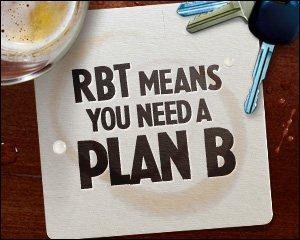
The Plan B drink driving campaign began in August 2012. It is about making positive choices to get home safely after a night out, highlighting that driving is not an option. With practical options to avoid drink driving, Plan B takes a humorous and positive approach designed to engage the community about making alternative arrangements to get home after a night out. The campaign emphasises that police mobile random breath testing (RBT) operations can happen anytime, anywhere.

Drink driving behaviour

Drink driving is one of the biggest causes of death and injury on NSW roads. In 2011, there were 70 people killed and 1182 people injured in crashes involving drivers who were over the legal blood alcohol limit. Men make up 87 per cent of drink drivers involved in fatal crashes.

  • Plan ahead on how to get home after a night out
  • Some Plan B’s are smarter than others
  • What’s your Plan B?
  • Drink and drive, and you will face the consequences
  • RBT means you need a Plan B

Cameras targeting illegal phone use across NSW

Cameras targeting illegal phone use across NSW

Mobile phone detection cameras will start targeting illegal phone use across NSW on 1 December and will include fixed and transportable trailer-mounted cameras. Together, these cameras will target illegal mobile phone use anywhere, anytime.

The detection system operates both day and night and in all weather conditions, using high-definition cameras to capture images of the front-row cabin space of all vehicles to detect illegal mobile phone use.

The system uses artificial intelligence to automatically review images and detect offending drivers, and to exclude images of non-offending drivers from further action. Images that the automated system considers likely to contain a driver illegally using a mobile phone are verified by authorised personnel.

As with other road safety camera programs in NSW, strict controls are in place to ensure images captured by the system are securely stored and managed.

Warning letters will be issued for the first three months. Following this period, the penalty for offending drivers is five demerit points and a $344 fine ($457 in a school zone). The penalty increases to 10 demerit points during double-demerit periods.

While mobile phone detection cameras will be switched on and issuing warning letters from 1 December, NSW Police continue to enforce illegal mobile phone use and issue infringements as part of regular operations.

Find more information about mobile phone rules and FAQs on our Know the rules page.

In the Road Safety Plan 2021, the NSW Government outlined plans to investigate camera-based technology to enforce mobile phone use offences.

Legislation came into effect in July 2018 that enabled NSW to pilot world-first mobile phone detection camera technology between January and June 2019.

Fixed and transportable cameras were found to operate reliably in real world conditions. During the pilot, the cameras detected more than 100,000 drivers using their phones illegally.

Slow Down and give us space, Update.

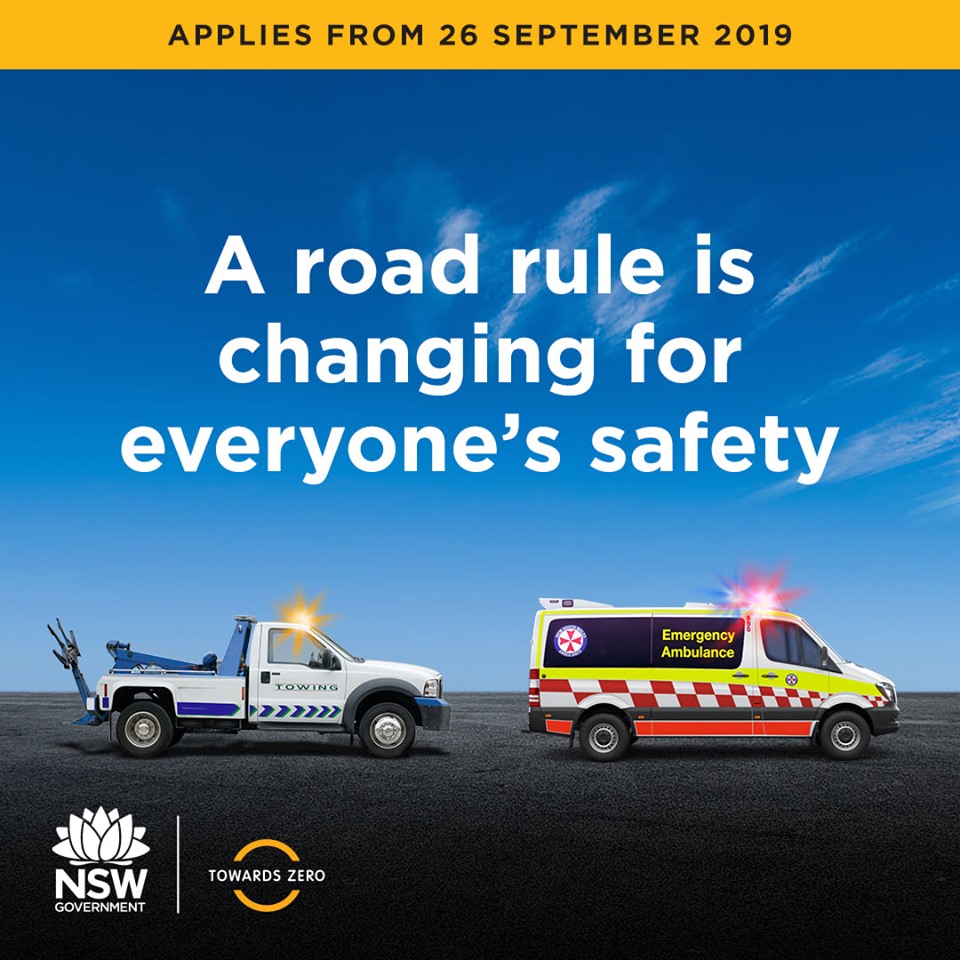
Changes to the road rules as of 26 September 2019

The trial of a rule that required motorists to slow down to 40km/h when passing stationary emergency vehicles with flashing blue or red lights has been completed and changes will be made to the road rule as a result of a review of the 12 month trial, which included community feedback.

This rule is being changed to improve the safety of emergency services personnel, tow truck operators and breakdown assistance providers working on the road, as well as the people they are helping. The changes will also make it safer on higher speed roads where the time and distance required to reduce speed to 40km/h is the greatest. The changes to the rule will commence on 26 September 2019.

The rule will protect more vulnerable roadside workers

The rule will be expanded to apply to motorists when passing stationary tow trucks and breakdown assistance vehicles displaying flashing yellow lights, in addition to emergency vehicles displaying flashing blue or red lights.

There will be changes to the requirements for motorists, depending on the speed limit of the road

On higher speed roads (with a speed limit of 90km/h or more), motorists will be required to slow down safely to a speed that is reasonable for the circumstances. Motorists must also provide sufficient space between their vehicle and the stationary tow truck, breakdown assistance or emergency vehicle displaying flashing lights. This will include changing lanes on a multi-lane road if it is safe to do so.

On lower speed roads (with a speed limit of 80km/h or less), motorists will continue to be required to slow to 40km/h when passing stationary tow trucks, breakdown assistance or emergency vehicles displaying flashing lights.

The rule applies to help protect those who protect us

All motorists must also give way to any person on foot in the vicinity of a stationary tow truck, breakdown assistance or emergency vehicle displaying flashing lights. Motorists must not increase their speed until they are a sufficient distance past all the vehicles and people involved.

The rule does not apply when a stationary tow truck, breakdown assistance or emergency vehicle displaying flashing lights is on the opposite side of a divided road separated by a median strip.

You can find more information in our Frequently Asked Questions.

A summary of the 12-month trial can be found in our Evaluation of the trial of 40km/h speed limit around stationary emergency vehicles (PDF, 137Kb) . 

Hi Cameron,

I just got my test today. My result is pass, thank you for a lesson. On the day you took me to 3 possible routes. They did not take me any 3 today but the route test officer took me is way easier than your route. All tricks and tips that you told me are helpful.

Thanks again for everythings you did. If you don’t mind I will recommend you to my friends but you may get a problem because they are not good in English.

Ben. 22/3/2019

A Review From Demi.

I RECENTLY GOT MY LICENCE!!!!, can’t thank Camber driving school enough! I reckon he’s one of the best instructors in the hills area! Unlike any other instructor I have come across, Cameron makes passing the test seem like a easy thing do – if you just stick to the rules! he exactly knows what he’s doing and knows the area and the roads back to front! He was patient and taught me exactly what I needed to know, previously I had some terrible experiences with instructors in the area but Cameron’s so easy going and believes in your ability to master all the rules in no time! what else do you need! Thanks Camber driving school! life is so much better and so much time saved thanks to my P’s but probably not possible this quickly without the help of this fantastic instructor!

A Review From Vijay

Thank you for giving the tips in those 2 lessons before the test, as it helped clear my driving test in the 1st attempt itself.

I would recommend Cameron on any given day, as he has loads of experience and corrects the driving patterns of individuals by giving useful tips which are very essential. Though, being an experienced driver after having driven across different countries, he made me realize a few basic things which are very crucial to pass the RTA test and everyone has to abide by that, to clear the DT seamlessly.

I will strongly recommend CAMBER classes and be relaxed and rest assured of clearing the DT with flying colours.

Regards

Vijay

--